In an age when disaster seems inevitable, how might history show us other ways forward? Writer and performer Sam Rees tells the extraordinary story of Vasili Arkhipov, a Soviet naval officer who saved the world, and considers the key role he plays in Sam’s upcoming project with Carmen Collective, GAMEPLAY, an audio described myth for the end times debuting at this year’s Edinburgh Festival Fringe.
Content Warning: This article discusses war
When my company Carmen Collective began making our new show GAMEPLAY, I knew I wanted to make something about the permacrisis that is reshaping life across the planet. I'm reluctant to call this approaching catastrophe 'World War Three' or 'the end of the world', because for many people in the Global South those realities are not impending, they are already here. The apocalypse has become a fictional genre largely because so many of us in the imperial core have had the privilege of imagining it from a distance. GAMEPLAY asks a different question. Rather than imagining the end, it considers how history remembers the people who prevented one.
Theatre has never been about reconstructing history exactly as it happened. It gives us permission to return to the past in order to think differently about the present, and about all the futures that almost came to be. History becomes less a museum than a rehearsal room. Its most urgent question is also its simplest: what would I have done?
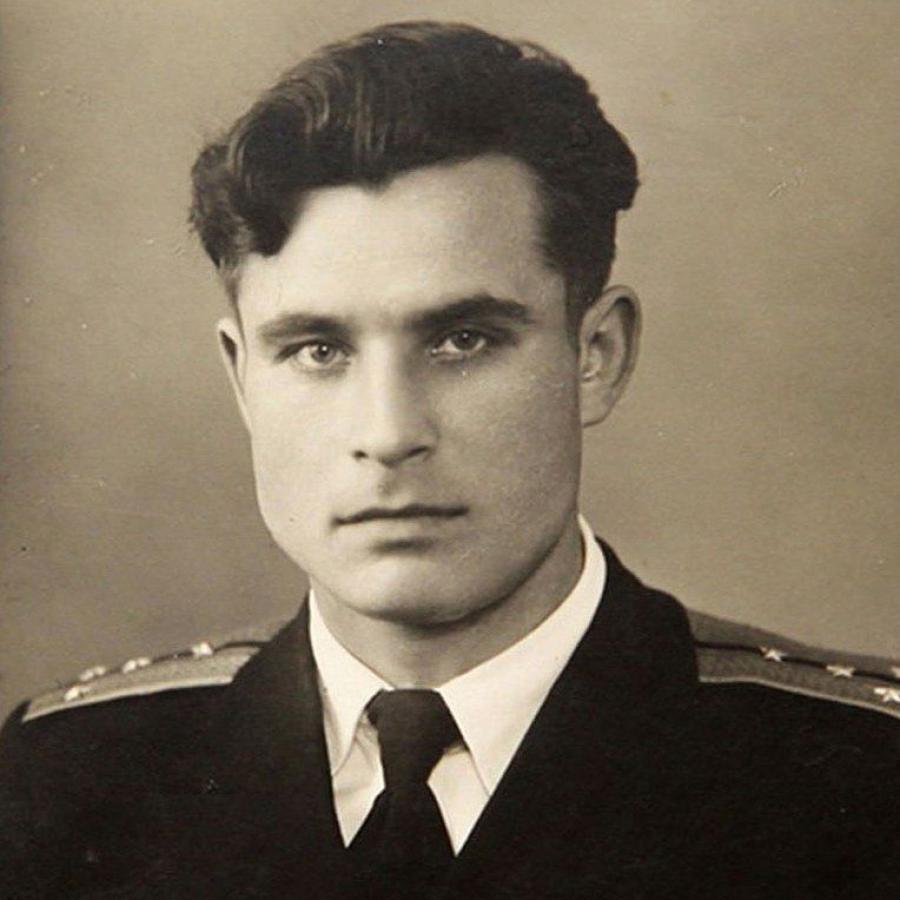
To think about how another future might still be possible, I found myself returning to one extraordinary life. At the centre of GAMEPLAY is a Soviet naval officer called Vasili Arkhipov. Most people have never heard his name. Yet almost everyone alive today owes something to the decision he made during a single afternoon in October 1962.
Vasili Arkhipov was born on 30 January 1926, in a small rural village called Zvorkovo, east of Moscow. Unlike many senior Soviet officers, Arkhipov came from a poor peasant family, and grew up during Stalin's violent collectivisation and purges. After graduating from the Caspian Higher Naval School in 1947, Arkhipov entered the Soviet submarine service, where he quickly developed a reputation for technical expertise, composure and independent judgement.
Before the Cuban Missile Crisis, Arkhipov had already survived what was arguably the Soviet Navy's worst nuclear accident. In July 1961, while serving aboard the submarine K-19, a catastrophic reactor failure threatened a nuclear meltdown. Seven engineers sacrificed their lives constructing an improvised cooling system that saved the vessel. Arkhipov was himself exposed to dangerous levels of radiation, an experience that almost certainly shaped the remarkable composure he displayed the following year.
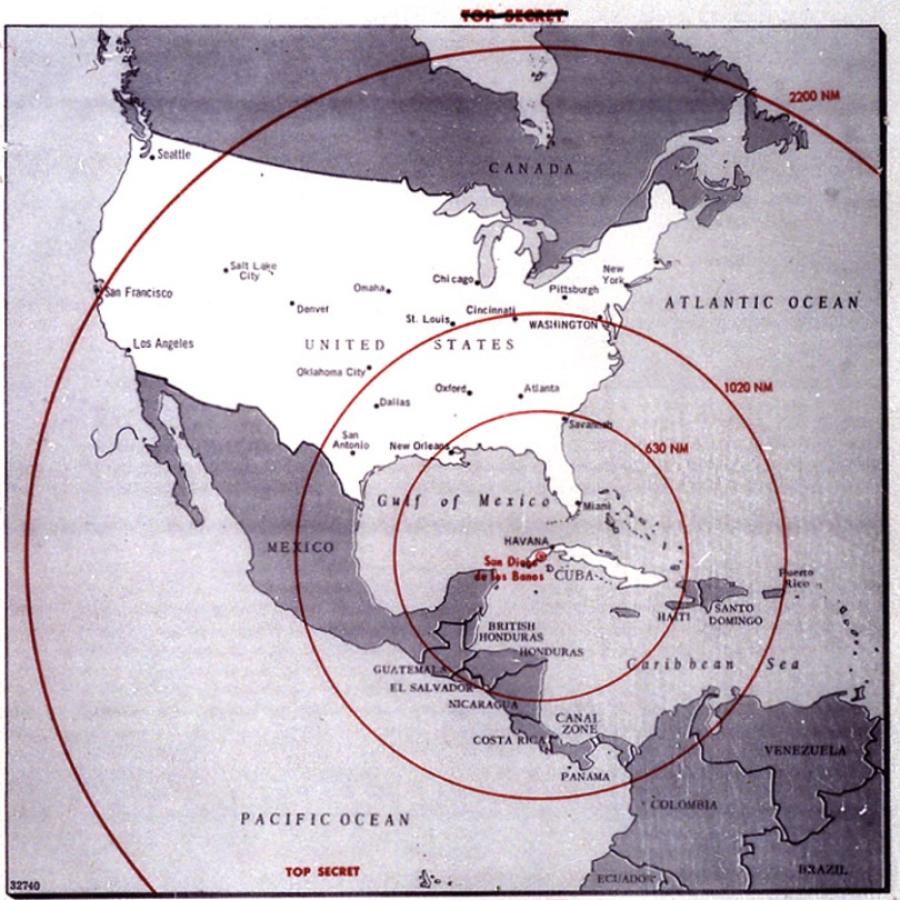
In October 1962, Vasili Arkhipov found himself in the unenviable position of being the chief of staff of the 69th Brigade aboard the B-59 submarine, which was submerged off the coast of Cuba carrying a nuclear torpedo. After days submerged, the submarine was suffocatingly hot, carbon dioxide levels were rising and communication with Moscow had been lost. An American ship above them had detected their presence and started dropping depth charges as a warning. For the crew of the B-59, there was no way of knowing this wasn’t an attack; nobody aboard knew whether war had already begun.
Launching the submarine's nuclear torpedo required the agreement of three senior officers: Captain Valentin Savitsky, political officer Ivan Maslennikov and Arkhipov. Savitsky believed war had begun and wanted to fire. Maslennikov agreed. Arkhipov argued there was still no evidence of war and persuaded them to surface instead. No torpedo was fired. Only decades later did Western historians discover how close this incident had come to initiating nuclear war.
Arkhipov retired in 1988 after more than forty years in the Soviet Navy. His wife Olga consistently described him as calm, intelligent, modest and quietly curious about the world. He sought neither publicity nor recognition for what had happened aboard B-59.
Arkhipov died in Moscow in 1998, long before the details of the B-59 incident became widely known following the declassification of Soviet archives. In 2017, his family accepted the inaugural Future of Life Award on his behalf, honouring someone whose actions made "today dramatically better than it might otherwise have been."
What makes Vasili Arkhipov remarkable is not that he was extraordinary, but that he appears, in almost every respect, ordinary. He wrote no famous books, gave no great speeches and sought no public acclaim. He was simply someone who, under unimaginable pressure, refused to make the worst possible decision. In a cramped submarine at the bottom of the ocean, exhausted, overheated and cut off from the outside world, his quiet refusal renders him one of history’s most consequential but least recognised figures.
History tends to remember the people who start wars, not the people who quietly prevent them. Vasili Arkhipov left behind no political movement, no great theory and almost no public record. What he left was a future, one most of us have inhabited without ever knowing his name.
GAMEPLAY isn't a biography of Arkhipov . It's an invitation to imagine what courage looks like when it isn't loud, triumphant or even recognised. At a moment when catastrophe can feel inevitable, his story asks whether another ending is still possible and whether history is made not only by those who seize power, but by those who refuse to surrender to it. And if the future is written through moments of impossible choice, then perhaps the theatre is one place where we can rehearse them together.
GAMEPLAY is part of Edinburgh Fringe 2026
5th – 31st August (not 17th August) at 2.40pm
Tickets £9 - £14
Written by Sam Rees