Music scores can tell stories across time, they can affect our emotions powerfully and how we connect with each other, but what happens when music is used as a form of state censorship, and a protest against it? Composer and sound designer AJ Turner tells the story of how music’s capacity to affect emotions was used by the Soviet Union in 1991 and reclaimed by artists and activists in the present day, and reflects on the role of music in their upcoming show with Carmen Collective, GAMEPLAY.
Content Warning: This article discusses war
We all know that music has an immense power to affect moods, feelings and emotions. As a composer in theatre, writing music to elicit specific emotional responses from audiences is your bread and butter. An uplifting gentle chord progression that rises up, the melancholy entrance of a bassline, an energising drop of a kick drum, a tense, ominous drone. It’s my job to manipulate your emotions, to change how you feel when you’re sat in a theatre through harmony, dissonance, rhythm and noise.
One of the clearest examples of just how much music affects emotions can be seen in the “calming” affects of classical music. Just a cursory look online shows millions of views and saves on “Calming Classical” playlists, it fills the apps designed to help you sleep, it’s played in adverts for wellness brands constantly. In the present day, calming classical music is essentially the commodification of music’s capacity to affect.
Back in 1991 in Russia, the calming affects of classical music played a very different role. During the failed August Coup which was the catalyst that triggered the fall of the Soviet Union, the state took control of all television broadcasts, pulling all scheduled programming and creating a media blackout. Instead, they broadcast a performance of Swan Lake on a continuous loop for 3 days. Swan Lake was used to try and soothe and pacify citizens, to create a feeling of calm in an emergency, simultaneously concealing the political unrest with the Soviet Union on the verge of collapse. Here, the calming affects of classical music operated as a form of state censorship to blind them from the stark reality taking place beyond their televisions. Journalists were forbidden from reporting on any of the events occurring, tanks and troops were descending on Moscow, chaos was ensuing, and the only thing citizens experienced in the media was an orchestra and ballet dancers delicately gliding across a stage. Music and emergency met in a surreal cocktail of ballet and battalions.
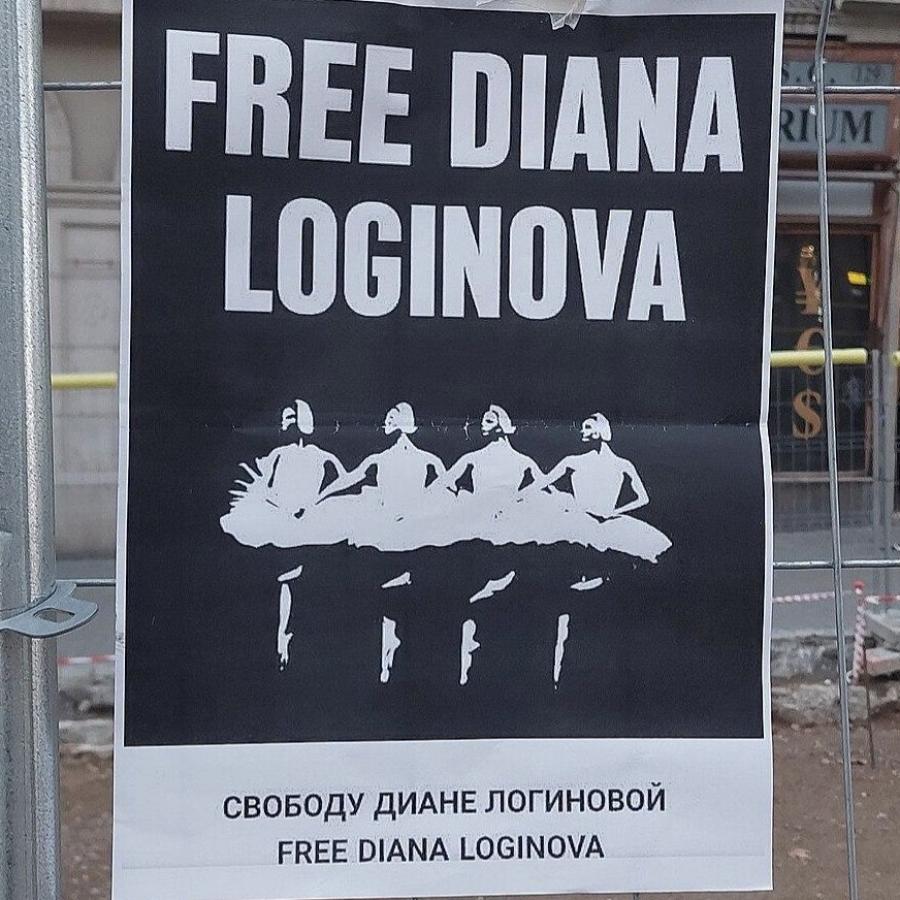
The ongoing symbolism of Swan Lake for Russian citizens was seen on the streets in 2018. Street art and activist group Yav (“yav” translates to “reality”) whose public works protest Putin’s regime, human rights violations and the invasion of Ukraine, graffitied ballerinas from Swan Lake on a wall in St. Petersburg accompanied by the numbers 2018, 1991, commenting on how little has changed with state censorship. In 2022, the independent Russian News channel TV Rain was forced to shut down due to their anti-war stance. After resigning on-air and stating “no war”, they aired a performance of Swan Lake as their final broadcast. Exiled anti-war Russian rapper Noize MC released the track “Cooperative Swan Lake” also in 2022, which samples music from the ballet, the lyrics calling for an end to Putin’s regime and condemning apathy towards the war in Ukraine. The song opens, “I'd like to comment on something you said, but I can't talk over the TV's din.” It was outlawed by the St. Petersburg District Court in 2025, who labelled it as "propaganda for the violent overthrow of the government", resulting in a protest where singer Diana Loginova performed the song and was joined by hundreds of young Russians loudly singing along with her. She was promptly arrested and jailed.
Whilst Swan Lake was used by the Soviet state to control citizens, to calm and conceal back in 1991, now it’s being used by artists and activists to draw attention to the truth of the censorship and propaganda enforced by the Russian state, to push back, to overthrow.
When writer and performer Sam Rees who I’m collaborating with for our show GAMEPLAY told me about the Swan Lake broadcast, I knew I wanted to sample it in the score. This orchestral piece holds so much in its legacy across decades, it tells so many stories from the past, the present, and about different possibilities for the future, which speaks to so much of what we’re exploring in this show. The first thing the audience will hear is the music from the 1991 broadcast, which reappears in different forms throughout the show as a motif that morphs and warps. Classical instrumentation – inspired by our inclusion of Swan Lake – blurs with electronic synths and guitars over the hour the audience spends with us, in which the past, present and future overlap. We look to the past to strive for something else as we hurtle towards an unknown future, one we can only imagine, but for which we need to imagine the possibility of a different future for us to be able to get there. Our sampling of Swan Lake in the show’s live score, its history and what it represents today reflects this. The liveness of the music is so essential to this show.
In GAMEPLAY we examine what it means for us to be in a room together, right now, breathing together, imagining together, when we’re staring down the barrel of a world in a state of emergency, and the music has such a living, breathing presence. As the broadcast of Swan Lake in 1991 and its subsequent reclamation shows, music and emergency are interwoven, and in GAMEPLAY, music is interwoven into every fibre of the experience of the show. I’m so excited to bring audiences into this experience with us.
GAMEPLAY is part of Edinburgh Fringe 2026
5th – 31st August (not 17th August) at 2.40pm
Tickets £9 - £14
Written by AJ Turner